Australian Lizards
Australian lizards are probably one of the most common creatures you'll see when you're visiting Brisbane and the surrounding area.
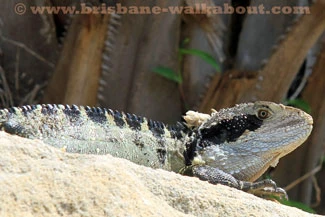
© Brisbane Walkabout | Water Dragon
Around Christmas time there are a lot of beetles hatching, so at this time you will also see a lot of Frilled Lizards sitting quietly in the sun, waiting to have feed on any beetles that fly past.
This page has photos of only some of the common Aussie lizards.
First the good news, they're all harmless so don't panic if you find one in your path or on a nearby wall.
Eastern Water Dragons
Eastern Water Dragons, like the one in the picture on the right, is one of the most common lizards.
You'll often see them in the parks and bushland near and around Brisbane.
Water dragons, as their name suggests like to be in or around water but they are generally met by visitors in parks and other places away from water. They can be found pretty well all along the eastern coast of Australia.
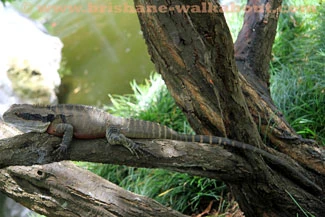
© Brisbane Walkabout | Water Dragon
Water dragons eat insects, frogs and berries for the most part.
They are out and about by day and night, which makes them vulnerable to pets such as dogs and cats.
They can grow to be about a metre long, which is around 3 ft, but generally they're not that big, and have spikes running down their spine from head to tail, which makes them look quite fearsome, if you aren't used to them. Their coloring is a pale greeny-grey with black bands across their bodies and tails.
Skinks
This one of the Australian lizards is called a Skink, and its the other most common species you'll see around Brisbane and Australia, particularly on walls.
Skinks are probably also the largest family of lizards world-wide, a distinction they vie with geckoes for. The photo shows what is probably an eastern three-lined skink, which is common throughout eastern Australia.
Skinks eat insects, crickets, grasshoppers, beetles and caterpillars, anything small enough for it to catch, as well as leaves and berries. They don't grow very big and they don't have spikes so they're much 'friendlier' for visitors to look at.
Some skinks have the ability to throw off and regrow their tail, if it is caught by a predator. Being able to regrow lost limbs is a useful feature more of us should have.
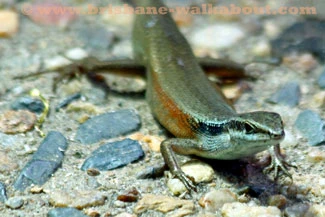
© Brisbane Walkabout | Skink
When you see something moving out of the corner of your eye in Australia, it's probably a skink. They live anywhere and everywhere, among the leaves of the forest floor, in trees, buildings, walls, rocks and in undergrowth. They're cute little creatures and are often kept as pets.
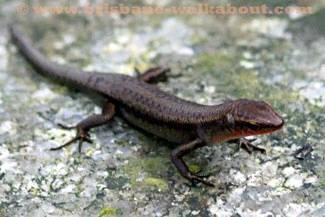
© Brisbane Walkabout | Skink
Skinks are so pervasive that one of the skink family, the blue-tongued skink, or blue tongue lizard, is part of the Aboriginal peoples' dreamtime legends as a sorcerer/trickster and you'll see them frequently in Aboriginal art.
Blue Tongue Lizards are pretty common in Brisbane backyards, and they do an excellent job in keeping insects numbers down.
Geckos
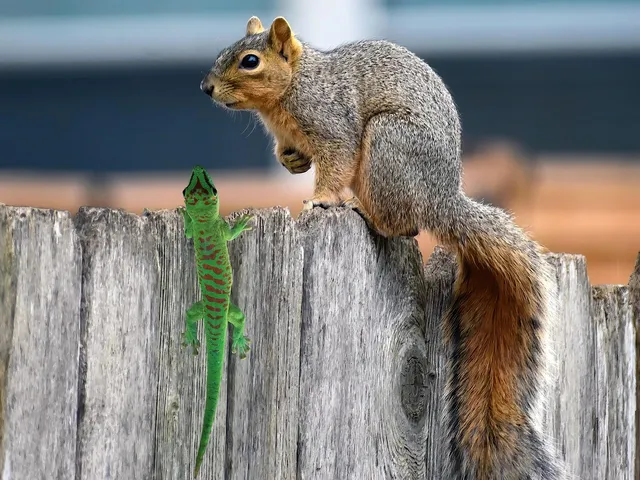
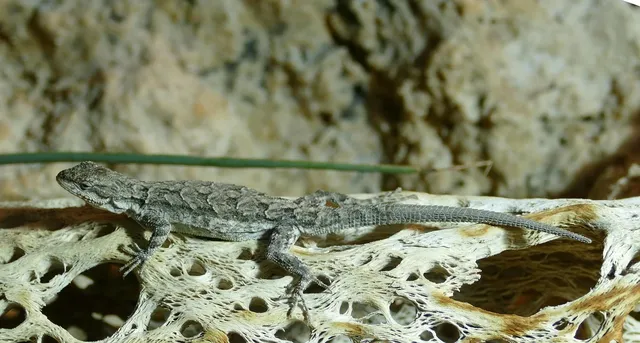
There are around 60 different species of Geckos that are native to Queensland, and many of the smaller species are called 'House Geckos' as they are frequently seen by residents in and around Brisbane scuttling up or across walls and ceilings when they are chasing after insects.
There is nothing quite like waking from a deep sleep to spy a gecko on the wall above your pillow!
 |
 |
Would You Like to See Some More Australian Lizards?
You'll find more wildlife photos on a number of our pages, including our article about Queensland Wildlife, Kangaroos, the Lone Pine Koala Sanctuary and Brisbane Wildlife.
Of course, you can also plan a visit to the Lone Pine Koala Sanctuary if you would like to see some of them up close and personal. Not my cup of tea, but you might enjoy the experience!
Brisbane Tours & Activities
Recent Articles


-
Suncorp Stadium Brisbane also known as 'The Cauldron'
Oct 06, 15 07:38 PM
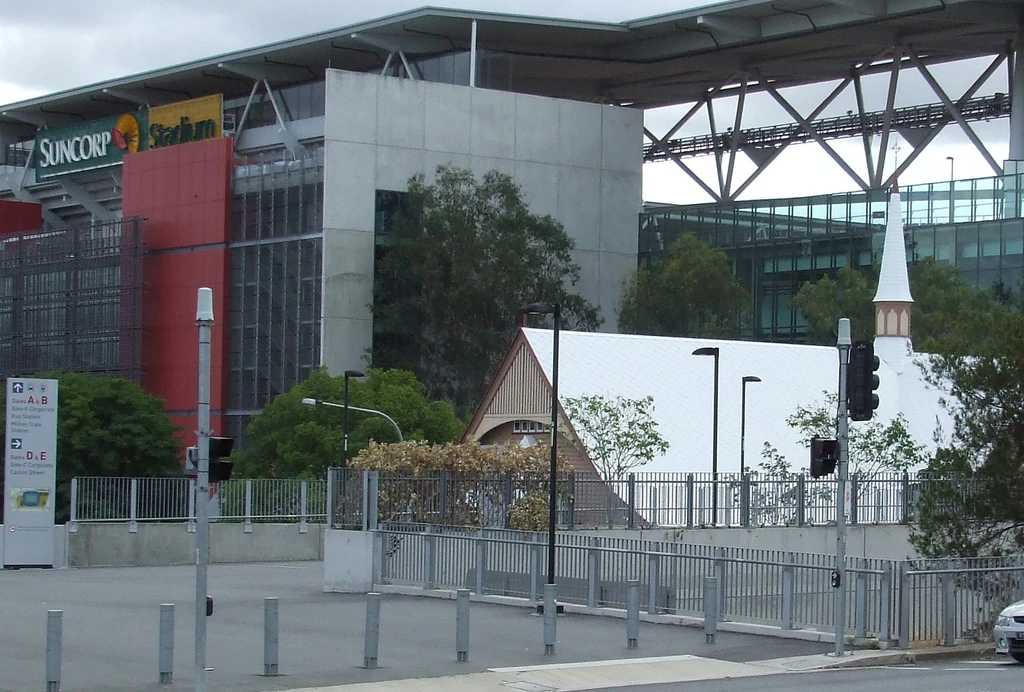
Suncorp Stadium Brisbane aka the Cauldron, is located in Milton, an is the spiritual home of rugby league in Brisbane.
-
Queensland Weather
Oct 05, 15 08:20 PM

Queensland weather offers a range of climates from Mediterranean like, with humidity around Brisbane to tropical heat up at Cape York.
-
Beautiful Australian Parrots
Oct 01, 15 09:03 PM
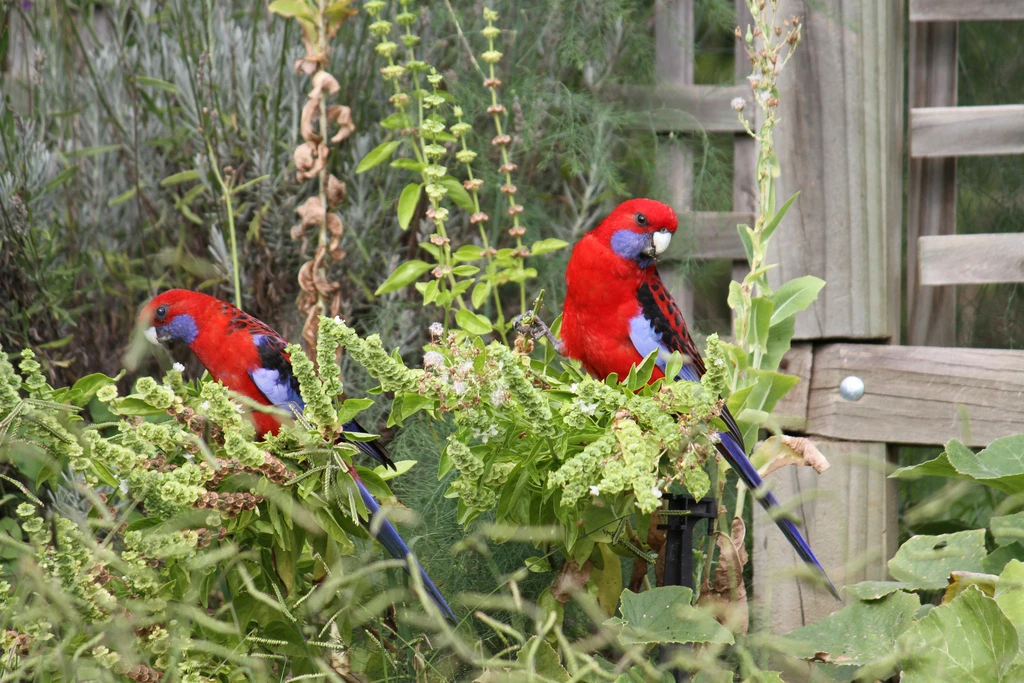
Australian parrots are gregarious, noisy and colourful. Their cousins, cockatoos, are less so in every respect. This page has photos of only some of them.
This site receives a small commission from affiliate links and third-party advertising.

All images on this site have been sourced legally and copyright remains with the photographer.
Flickr | CanstockPhotos | Dreamstime
New! Comments
Have your say about what you just read! Leave me your thoughts in the box below.